

Judgment axis | detail |
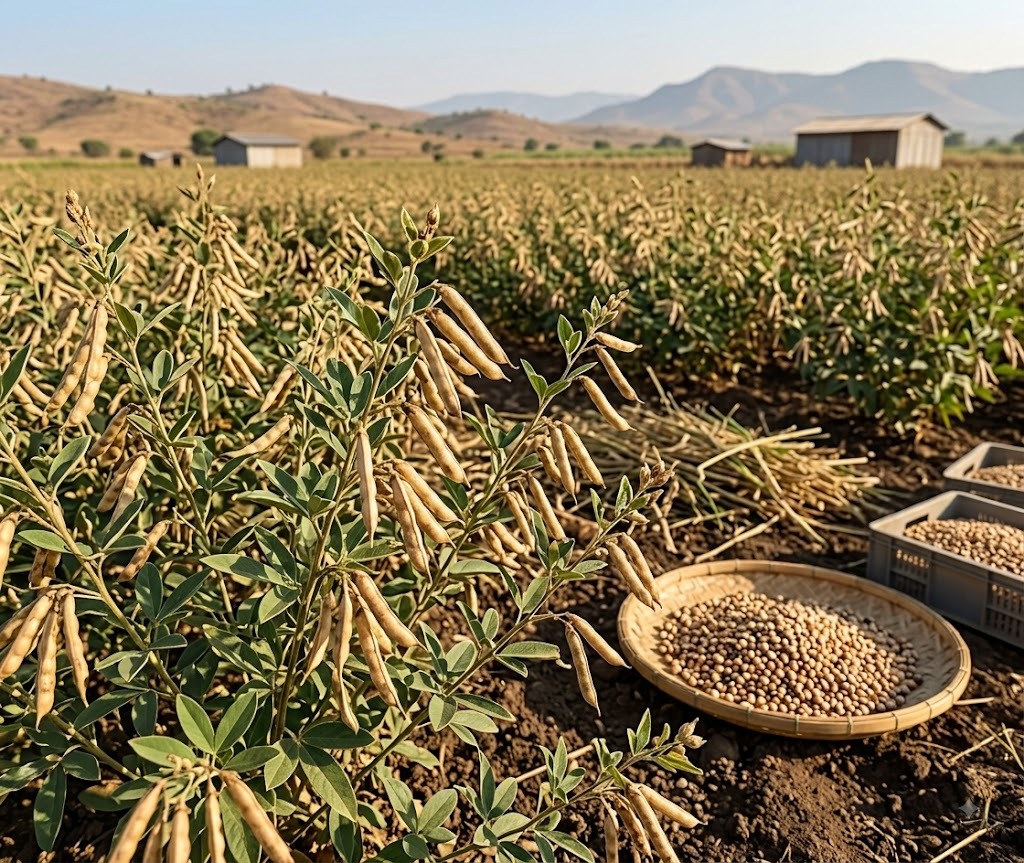
| Item Identity | Lupin beans are legumes whose seeds of plants belonging to the genus Lupinus are used for food. The white lupin (*Lupinus albus*) is representative in the food distribution market, and species and varieties must be clearly managed. |
| Scope of this registration | Dried whole lupin beans that have undergone verification of edible suitability are used as the base product, while soaked, boiled, and brine-pickled ruffini, as well as hulled, milled, and protein materials, are managed as extended entities. |
| Core separation | Separate edible seeds / feed/seeds / low-alkaloid varieties / bitter varieties / dried raw materials / de-bittered, cooked, and brine-pickled products. |
| Differences from similar items | No. 026 Pigeon peas are important for dal and curry-type processing, whereas lupin beans have a separate supply chain where the management of bitter alkaloids, allergens, and de-bittering processes is key. |
| Main uses | Boiled lupin is a pickled snack, appetizer, salad, HMR, mixed legume, lupin flour, bakery, food ingredient, and plant-based protein raw material. |
| Purchase criteria | These include plant species, varieties, and suitability for consumption; grounds for alkaloid management; allergen labeling; moisture, foreign matter, pests, and microorganisms; suitability for soaking, boiling, de-salting, and brine pickling; and lot history. |
| Key Risk | The issues include mixing of edible and feed-grade products, bitter varieties or incomplete desalination, omission of allergen labeling, and a disconnect in the traceability between the raw material lot and the processed or brine-pickled lot. |
| Operational direction | Connects production/import – edible suitability verification – sorting – soaking/boiling/de-boiling – cooking/material testing – RFQ – delivery/claim – repurchase data. |
division | Registration details |
| Korean name | lupin beans |
| English name | Lupin bean, Lupini, Lupin seed |
| Distribution/Processing Name | Lupini, White lupin, Sweet lupin, Lupin flour, etc. are managed separately as aliases by product and distribution region. |
| Representative edible scientific name | Lupinus albus L. |
| Extended management type | Lupinus angustifolius L., Lupinus luteus L., etc. are registered as separate Species Entities when the actual source species are identified. |
| class | Fabaceae |
| Edible parts | Mature and dried seeds, seeds after soaking, boiling, and deboning |
| Edible parts based on this container | Mature, dried, and processed seeds that have undergone confirmation of suitability for consumption |
| Harvesting stage | The stage of harvesting dried seeds after pod maturation |
| Product form | Dry whole grains · Selected grains · Soaked · Boiled ruffini · Brine-pickled · Peeled grains · Powder · Protein material · Mixed legumes · Small packaging |
| Basic use | Pickles, snacks, salads, side dishes, HMR, soups, bakery items, powders, plant-based protein materials |
| Non-edible/Separation Target | For animal feed, seeds, unverified bitter varieties, and unidentified alkaloid ingredients |
| Allergen Management | Since lupin is an ingredient requiring allergen management and labeling, national labeling and import standards are checked based on the country of origin and the country of sale. |
Product Master | Management standards |
| Dry whole grains for cooking | Scientific name, variety, edible suitability, moisture, color, particle size, grain size, foreign matter, pests, cookability |
| Immersion and boiled Ruffini | Raw Material Lot · Immersion · Heating Conditions · Removal Management · Brine · Microorganisms · Packaging · Shelf Life |
| Salt-pickled Ruffini | Salinity · pH · Filling · Sealing · Microorganisms · Storage Stability · Labeling |
| For salads and HMR | Texture, shape retention, saltiness, sauce suitability, refrigeration, and room temperature distribution conditions after cooking |
| lupin powder | Raw material species, peeling status, basis for alkaloid management, moisture content, particle size, microorganisms, and allergen labeling |
| For protein and food materials | Raw Material Lot · Processing Process · Component Testing (e.g., Protein) · Microorganisms · Applicability · Standards |
| For small packaging and private label | Country of origin, country of processing, allergens, cooking instructions, labeling, packaging specifications, expiration date |
Classification criteria | Subdivision type | Management principles |
| Plants/Items | Lupin beans / Pigeon beans / Lima beans / Kidney beans / Cowpeas | Register scientific name, genus, and species as required values |
| lupin species | L. albus / L. angustifolius / L. luteus / Other identified species | The species is not estimated based solely on the common name “lupin” |
| use | For food / animal feed / seeds / research | Separate edible and non-edible products |
| Variety and ingredient management | Low-alkaloid edible varieties / Bitter/Unidentified varieties | Verify the basis for edible suitability and safety management data. |
| Edible parts | Mature/Dried Seeds / Cooked/Pickled Seeds | Non-essential parts such as pods and leaves are registered separately. |
| Harvesting stage | Mature and dried seeds | Record the harvest year, harvest date, and drying status. |
| Raw material condition | Whole grains, selected grains, peeled grains, powder, protein material | Distinguishing between the presence or absence of seed coat, particle size, and powder contamination |
| Processing stage | Sorting, drying, soaking, boiling, removing bitterness, brine pickling, refrigeration, sterilization, milling, small packaging | Process Date, Condition, Process Company, Process Lot Connection |
| Final use | Ruffini · Snacks · Salad · HMR · Bakery · Powder · Plant-based Protein | Separation of safety, quality, and cooking test standards by usage |
| Transaction type | Bulk, Small Packaging, PB, OEM, Raw Material Supply | Separation of MOQ, delivery time, marking, inspection, and contract conditions |
Both lupin beans and No. 026 pigeon peas are legume seeds that can be used in soups, salads, and as ingredients for processed foods. However, for pigeon peas, managing their culinary suitability is crucial, focusing on shelled and split products, whereas for lupin beans, priority is given to verifying edible varieties, managing alkaloids, de-bittering processes, and allergen labeling .
step | Essential Dataset | Management purpose |
| Seeds and cultivation | Scientific name, variety, country of origin, region of origin, cultivation method, sowing season, classification for edible/feed use | Check plant species, uses, and production history |
| Seed harvest | Harvest year, harvest date, maturity, threshing date | Distinction between new crops and long-term inventory |
| Drying and sorting | Drying method, moisture, color, particle size, granularity, breakage, foreign matter, pests | Grading of raw materials for storage and cooking |
| Confirmation of edible suitability | Basis for raw material species/variety, safety management documents, and alkaloid-related test or verification data | Prevention of mixing of non-edible ingredients |
| Soaking, boiling, and removing bitterness | Raw Material Lot · Immersion Date · Water Replacement · Heating Conditions · Process Time · Process Lot | Management of bitterness, safety, and texture |
| Salt pickling and filling | Brine specifications, filling date, sealing, pH, heat treatment, storage conditions | Ruffini Product Safety Management |
| save | Receipt date · Warehouse · Temperature and humidity · Pest control · Inventory days | Prevention of pests, discoloration, and quality degradation |
| Inspection and Shipment | Lot ID · Test Report · Allergen Labeling · Packaging Date · Shipment Date · Demand Center | Tracking deliveries, returns, and claims |
Domestic cultivation area and production volume, as well as import volume, importing country, and customs clearance unit price, are registered along with the base year and unit after verifying raw data from KOSIS and the Korea Customs Service. Unverified figures are not entered in v1.0.
Quality items | Dry granules | Pickled Ruffini | Salad · HMR | Powder/material | commonness |
| Scientific name, variety, and suitability for food | core | core | core | core | core |
| Distinction between edible and feed use | core | core | core | core | core |
| Basis for alkaloid management | core | core | core | core | Verified/NDA |
| Allergen labeling and documentation | importance | core | core | core | Check sales country standards |
| moisture | core | By process | By process | core | core |
| Color, Appearance, and Grain Size | core | importance | importance | importance | importance |
| Whole grain, peeled, powdered state | core | importance | importance | core | core |
| Damage, discoloration, foreign matter, pests | core | core | core | core | core |
| Immersion, heating, and de-salting history | Not applicable | core | core | Raw material standards | Management by process |
| Salinity, pH, and sealing stability | Not applicable | core | core | Not applicable | Product-specific management |
| Microbiology and Test Report | Terms of trade | core | core | core | Verified/NDA |
| Texture and shape after cooking | importance | core | core | assistance | Tests by Use |
Lot Master Required Field
Lot ID · Item Name · Scientific Name · Variety · Classification for Edible/Feed Use · Basis for Confirmation of Suitability for Edibility · Edible Part · Harvest Stage · Product Form · Country of Origin/Processing · Producer/Importer · Harvest Year · Harvest Date · Threshing/Drying Date · Receipt Date · Date of Immersion/Boiling/Deboiling/Pickling Process · Moisture · Color/Particle Size · Whole Grain · Broken · Foreign Matter/Pests · Alkaloid Management Data · Allergen Labeling Verification · Microbiology/Inspection Report · Storage Conditions · Packaging Date · Shipment History · Claims
Customers | Purchase criteria | Cooperation opportunities |
| Distribution of imported food and small packages | Scientific name, origin, country of processing, edible suitability, labeling, and cookability | Dry whole grains · Ruffini small packaging |
| Mediterranean, Middle Eastern, and European food distribution | Ruffini Product Specifications · Saltiness · Texture · Packaging · Shelf Life | Pickled, snack, and salad products |
| Dining Out & School Meals | Cooking convenience, texture, stability, delivery time, packaging unit | Ingredients for salad, side dishes, and soup |
| HMR manufacturing | Tear-off, heating, sauce suitability, microbiology, packaging conditions | Salad, Side Dish, and Convenience Food OEM |
| Bakery and food materials | Labeling of raw material types, particle size, moisture, microorganisms, and allergens | Lupin Powder · Mixed Powder RFQ |
| Plant-based protein material company | Raw material specifications, processing methods, ingredients, and stable supply | RFQ for Joint Development of Protein Materials |
| Local governments and research institutes | Feasibility of test cultivation, processability, food safety, and sales channels | Demonstration of legume cultivation and processing |
| PB · Online Distribution | Labeling, Packaging, MOQ, Shelf Life, and Repurchase Data | Development of imported and processed PB |
The size of the domestic market and sales volume by channel are not quantified until official statistics or verifiable distribution data are secured. Initially, a market map based on actual demand is constructed by accumulating specifications required by customers and recurring RFQs.
step | Key variables | Operational judgment |
| Production and Import | Scientific name, variety, suitability for food, country of origin, place of production, harvest year, customs clearance date | Separation of feed/unidentified varieties from edible raw materials |
| store | Lot · Moisture · Appearance · Damage · Foreign Matter · Pests · Documents | Verification of long-term inventory, quality deviation, and traceability |
| Selection | Color, particle size, grain size, and breakage rate | Standardization of raw materials by use |
| Soaking, boiling, and removing bitterness | Raw Material Lot · Processing Date · Time · Water Management · Heating · Sensory Verification | Safety, bitterness, and texture verification |
| Pickling and processing | Salinity · pH · Filling · Sealing · Heat Treatment · Microorganisms | Ruffini & HMR Product Safety Verification |
| save | Temperature, humidity, pest control, refrigeration status, and inventory days | Maintaining quality and packaging stability |
| packaging | Bulk · Small Packaging · PB · OEM · Allergen Labeling | Management of country of sale labeling and expiration dates |
| Buyer RFQ | Product Type · Scientific Name · Specifications · Safety Documents · MOQ · Delivery Time | Matching suitability other than price |
| Repurchase | Delivery · Return · Bitterness · Texture · Labeling Claim · Reorder | Supplier, Lot, and Standard Evaluation Update |
Products and processes | Key conditions | RFQ conversion |
| Dried whole-grain lupin beans | Scientific name · Edibility · Color · Particle size · Moisture · Grain consistency · Foreign matter · Pests | RFQ for raw materials for cooking |
| Immersion and boiled Ruffini | Immersion, heating, de-salting, texture, microorganisms | Refrigerated/Room Temperature Cooking Bean RFQ |
| Salt-pickled Ruffini | Salinity, pH, Filling, Sealing, Storage Stability | Snacks, Side Dishes, and PB RFQ |
| For salads and HMR | Texture, shape retention, saltiness, and sauce suitability | RFQ for Ingredients for Foodservice and Convenience Foods |
| For soups and stews | Soaking, heating, softening, viscosity, texture | HMR · Foodservice Ingredients RFQ |
| lupin powder | Raw material species, peeling, alkaloid management, moisture, particle size, microorganisms | Bakery & Food Ingredients RFQ |
| Protein and mixed materials | Raw Material Lot · Processing Method · Ingredients · Dispersibility · Applicability | Plant-based Protein Development RFQ |
| Non-selected items | Whether food conversion is impossible · Laws · Hygiene · Feed standards | Separate cooperation review after separation from the edible lot |
The conversion of non-selected products and by-products into animal feed must be completely separated from food-grade lots, and registration is required only after verifying relevant laws, hygiene, and business operator requirements.
first of all | Execution item | Performance indicators |
| 1 | Scientific Name, Variety, Edible/Feed Use, Edible Suitability, Harvest Stage, Product Form, Lot ID made mandatory | Required value input rate |
| 2 | Production/Import – Receiving – Sorting – Immersion/Boiling/Deboning – Pickling/Processing – Shipment History Link | Lot tracking rate |
| 3 | Accumulation of quality and process test results by dried, ruffini, salad, HMR, and powder | Exam registration rate |
| 4 | Entity linkage of test reports, allergen labeling, customs clearance, and processing documents | Document linkage rate and non-conformity rate |
| 5 | Producer/Importer–Processor–PB–Buyer RFQ Connection | Matching rate, contract fulfillment rate, and repurchase rate |
Problem group | Problem Definition | Required data |
| Mixed plant and item | Managing lupin beans as simple legumes omitted differences in species, varieties, and uses | Scientific name, genus, species, variety |
| Mixed use for food and feed | Risk of raw materials with unverified food suitability being mixed into the food supply chain | Raw material usage, production history, and verification documents |
| Lack of alkaloid management | Distribution of raw materials and processed products without a basis for management regarding bitterness and safety | Test, verification data, and final processing history |
| Disruption of the processing process | The soaking, boiling, de-salting, and pickling processes are not connected to the original lot. | Process Date · Conditions · Processing Company · Process Lot |
| Missing allergen label | The labeling standards of the country of sale and the product labeling are not linked | Standards for labeling, exporting country, and selling country |
| Unclear specifications | Standards for moisture, particle size, breakage, foreign matter, salinity, and pH are missing from the RFQ. | Lot Quality, Inspection, and Process Data |
| Storage risk | Lack of management of moisture, temperature and humidity, pests, and inventory days | Storage, pest control, inspection, and inventory data |
| Disconnection from marketability | Performance results are not accumulated after one-time import and processing. | MOQ · Delivery · Returns · Claims · Repurchase |
RFQ Type | Public Registration | Verify/NDA |
| Contract farming of edible lupins | Region·Scientific name·Variety·Harvest season·Product form·Use | Area, Estimated Volume, Contract Unit Price, and Edibility Data |
| Dry granule supply | Species, Variety, Color, Grain Size, Grain Size, Packaging, Desired Time | Harvest Year · Moisture Content · Certificate · Quantity · Unit Price |
| Ruffini processing | Raw material specifications, soaking, heating, deboning, and packaging purposes | Samples, process conditions, test reports, quantity, unit price |
| Salt-pickled PB·OEM | Target Channel, Salinity, Packaging, and Labeling Range | Recipe · pH · Microorganisms · MOQ · Unit Price · Contract |
| For salads and HMR | Texture, shape, salt content, heating conditions, packaging | Cooking test · Sample · Process conditions · Contract |
| For powders and materials | Raw material type, particle size, dehulling, and application | Ingredients, Microorganisms, Allergens, Yield, Unit Price |
| Joint development of plant-based proteins | Material Target · Applicable Food · Desired Standards | Processing technology, test reports, and joint development conditions |
| Storage, sorting, and processing | Processing Function · Desired Period · Product Type | Facility, Cost, Inventory, and Test Report Details |
| Import and distribution cooperation | Product type, labeling country, and distribution channel | Country of origin, customs clearance, quantity, unit price, contract |
① Need Products & Materials
Companies and institutions seeking necessary products, agricultural products, raw materials, and processed goods register purchasing demands. Registered requests are utilized to review cooperation with potential suppliers and producers based on the RFQ Intelligence Library.
Process:
RFQ Registration → Supplier/Product Review → Collaboration Connection → Future AI Matching
Register
② We are looking for production and manufacturing partners. (Need Suppliers & Manufacturers)
Register a request to find necessary production and supply partners, ranging from farms and producer organizations to processing companies, OEM, ODM, and private label manufacturers.
Process:
RFQ Registration → Review of Production & Manufacturing Capabilities → Collaboration Connection → Future AI Partner Matching
Register
③ We are looking for domestic and international buyers. (Need Buyers)
Farmers, producer organizations, and manufacturing companies are requesting cooperation with new buyers, such as domestic and international distributors, importers, brand companies, and food service and catering businesses.
Process:
RFQ Registration → Product & Supply Capability Review → Market & Buyer Connection → Future AI Buyer Matching
Register
Contact : mail@markethub.org
Version | Main contents | situation |
| v1.0 | Registration of Lupin Bean Raw Material, Safety, Processing, and RFQ Basic Structure | complete |
| v1.1 | Verification of KOSIS·Korea Customs Service raw data and domestic import and distribution structure | expected |
| v2.0 | Separation of species, varieties, edible suitability, ruffini, powder, and material specifications | expected |
| v3.0 | Production–Processing–PB·Buyer Verified Container Combination | expected |