

Judgment axis | detail |
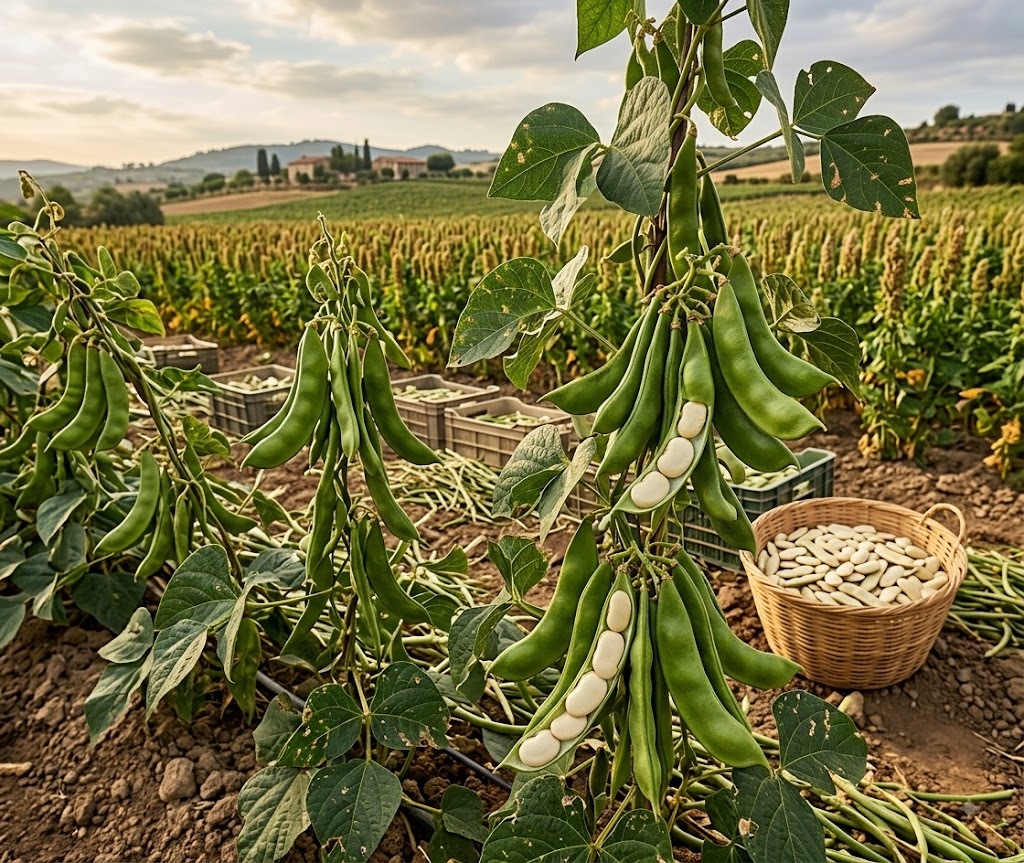
| Item Identity | The lima bean is a legume whose seeds, derived from Phaseolus lunatus of the legume family, are used for food. |
| Core separation | It distinguishes between unripe pods, unripe seeds, mature dried seeds, whole kernels, shelled, split, frozen, canned, and powdered products. |
| Differences from similar items | Cowpeas belong to the genus Vigna, while kidney beans are separate species within the same genus Phaseolus. They do not share standards for raw materials, cooking, or processing. |
| Main uses | It is raw material for salads, soups, stews, braised dishes, side dishes, HMR, frozen vegetables, canned goods, powders, and small-package PB products. |
| Purchase criteria | The seeds are seed size, color, grain size, moisture content, breakage, foreign matter, pests, soaking and boiling properties, shape retention, safety, and processing history. |
| Key Risk | The issues include the mixing of unripe products and dried seeds, the absence of standards for large and small grains, color, and product shape, long-term storage, pests, and the omission of verification regarding proper pretreatment and heating. |
| Operational direction | Connects variety groups, harvest stages, lot history, cooking and processing trials, RFQs, claims, and repurchases. |
division | Registration details |
| Korean name | Lima beans, butter beans |
| English name | Lima bean, Butter bean |
| scientific name | Phaseolus lunatus L. |
| class | Fabaceae |
| Edible parts | Immature pods, immature seeds, mature and dried seeds |
| Edible parts based on this container | Mature and dried seeds |
| Harvesting stage | Green pod and green seed stage / Mature seed harvesting stage after pod ripening |
| Product form | Dried whole grains, sorted grains, hulled grains, split grains, frozen green seeds, canned goods, cooked beans, powder, mixed legumes, small packages |
| Basic use | Soup, Stew, Salad, Braised Dishes, Side Dishes, HMR, Frozen Vegetables, Canned Goods, Powder, Food Materials |
| For seeds | Separate management of varieties, germination rates, quarantine, and seed history |
Product Master | Management standards |
| Dry whole grains for cooking | Maintaining seed size, color, moisture, soaking, boiling, and shape |
| For soups and stews | Soaking time, boiling properties, texture, viscosity, breakage rate |
| For salads, side dishes, and braised dishes | Wholeness, appearance, shape retention, texture, color after cooking |
| Frozen Foot Seed Practical | Texture after harvesting, pretreatment, rapid freezing, and thawing |
| For canning | Sorting, soaking, heating, filling, sealing, and storage stability |
| For powders and materials | Dehulling · Splitting · Moisture · Particle Size · Grindability · Microorganisms |
| For small packaging and private label | Country of origin, labeling, packaging specifications, cooking instructions, expiration date |
Classification criteria | Subdivision type | Management principles |
| Plants/Items | Lima beans / Kidney beans / Cowpeas | Manage scientific name, genus, and species as required values |
| Harvesting stage | Unripe pods/Unripe seeds / Mature dried seeds | Register vegetable type and legume raw material type as separate entities |
| Seed type | Concrete, granular, white, spotted, etc. | Record the breed group, size, and color of the actual lot |
| Raw material condition | Whole grains, selected grains, molted grains, split grains | The presence or absence of the seed coat and the state of division must be recorded. |
| Processing stage | Sorting, drying, soaking, boiling, freezing, canning, powdering, small packaging | Connect Process Date, Process Company, and Lot |
| Final use | Soup, Stew, Salad, Braised Dishes, HMR, Frozen Foods, Canned Foods, Powder | Separating standards and tests by application |
| Transaction type | Bulk · Small Packaging · PB · OEM · Contract Farming | Manage MOQ, delivery time, labeling, and inspection conditions separately |
Lima beans are legumes of a different genus from No. 024 cowpeas, and although they belong to the same genus Phaseolus as kidney beans, they are distinct species. In particular, green, frozen, and canned lima bean products are not integrated into a single standard because they differ from dried seeds in terms of harvest time, pretreatment, storage, distribution, and cooking methods.
step | Essential Dataset | Management purpose |
| Seeds and cultivation | Variety · Variety group · Production area · Cultivation method · Sowing time | Check variety, origin, and cultivation history |
| Harvesting green pods and green seeds | Harvest date, maturity, sorting date, pretreatment date | Traceability of vegetable-type products |
| Harvesting dried seeds | Harvest year, harvest date, maturity, threshing date | Distinction between new crops and long-term inventory |
| Drying and sorting | Drying method, moisture, color, particle size, whole grain, foreign matter | Storage stability and grading by use |
| Pretreatment and heating | Annealing, heating, cooling, process conditions | Verification of suitability for cooking and processing and safety |
| Frozen and canned goods | Pre-treatment/freezing date or manufacturing date/packaging conditions | Product-specific process tracking |
| save | Receipt date · Warehouse · Temperature and humidity · Pest control · Inventory days | Prevents discoloration, pests, and quality degradation |
| Inspection and Shipment | Lot ID · Test Report · Packing Date · Shipment History | Delivery and Claim Tracking |
Domestic cultivation area and production volume, as well as import volume, importing country, and customs clearance unit price, are registered along with the base year and unit after verifying raw data from KOSIS and the Korea Customs Service . Unverified figures are not entered in v1.0.
Quality items | Whole grain cooking | Soup and Stew | Salad and stew | Frozen and canned goods | Powder/material | commonness |
| Harvesting stage · Product form | core | core | core | core | core | core |
| Seed size and particle size | core | importance | core | importance | importance | core |
| Color and appearance uniformity | importance | importance | core | importance | importance | importance |
| Whole grain, molting, and splitting state | core | importance | core | importance | core | core |
| moisture | core | core | core | By process | core | core |
| Damaged/Discolored Lips | core | importance | core | importance | importance | core |
| Foreign objects, stones, metal | core | core | core | core | core | core |
| Pest damage | core | core | core | Before stocking | core | core |
| Calling · Life Voice | core | core | core | Standard test | assistance | Tests by Use |
| Shape retention and texture | importance | importance | core | core | assistance | Sample verification |
| Viscosity, Grindability, Yield | assistance | importance | assistance | assistance | core | Processing test |
| Pretreatment and heating conditions | importance | importance | importance | core | importance | Process verification |
Lot Master Required Fields
Lot ID · Variety/Variety Group · Harvest Stage · Product Form · Seed Size/Color · Whole/Dehulled/Splitting Status · Country of Origin · Producer/Importer · Harvest Year · Harvest Date · Threshing/Drying Date · Receipt Date · Moisture · Particle Size · Broken/Discolored Grains · Foreign Matter Inspection · Pest Damage · Soaking/Heating Test · Freezing/Canning Process History · Inspection Report · Storage Conditions · Packaging Date · Shipment History · Claim
Customers | Purchase criteria | Cooperation opportunities |
| Distribution of imported food and small packages | Origin, seed size, color, harvest year, and culinary quality | Bulk and small package supply |
| Salads, Eating Out, School Meals | Wholeness · Cooking Time · Texture · Stable Delivery Time | Supply of cooking ingredients |
| HMR and side dish manufacturing | Soaking, boiling properties, shape retention, sauce suitability | Stew, Braised Dishes, and Side Dishes RFQ |
| Frozen food manufacturing | Unripe seed harvesting stage, pretreatment, freezing, thawing, texture | Frozen Raw Materials · OEM |
| Canned food manufacturing and distribution | Seed specifications, soaking, heating, and suitability for filling | Canned Food OEM·PB |
| Soup and sauce preparation | Dehulling, splitting, viscosity, and grindability | Soup and paste ingredients |
| Bakery and food materials | Moisture, particle size, microorganisms, grindability | Powder/Mixed Material RFQ |
| Local governments and research institutes | Contract farming, local processing, and sales channels | Duryu Demonstration and Sales Channel Cooperation |
step | Key variables | Operational judgment |
| Production and Import | Country of origin, variety group, seed size, color, harvest year, customs clearance date | Verification of supply stability and suitability for use |
| store | Lot · Moisture · Appearance · Foreign Matter · Pests | Separation of long-term inventory and quality deviations |
| Screening and Preprocessing | Particle size, color, grain size, soaking, heating | Standardization by Use and Cookability Management |
| Frozen and canned goods | Harvesting stage · Processing day · Heating · Freezing · Sealing | Vegetable and Processed Food Traceability |
| save | Temperature, humidity, pest control, and inventory days | Prevention of pests, discoloration, and reduced cookability |
| Cooking and processing | Soaking · Boiling · Texture · Shape · Viscosity · Yield | Final product suitability verification |
| packaging | Bulk · Small Packaging · PB · OEM | Management of labeling, expiration dates, and packaging standards |
| Buyer | MOQ · Delivery Time · Specifications · Test Report | Quality matching beyond price |
| Repurchase | Delivery · Return · Claim · Reorder | Supplier and Standard Evaluation Update |
Products and processes | Key conditions | RFQ conversion |
| Dried whole lima beans | Seed size, color, moisture, soaking, and boiling properties | RFQ for raw materials for cooking |
| Lima beans for soup and stew | Soaking, heating, texture, viscosity, breakage rate | HMR · Foodservice Ingredients RFQ |
| For salads and stews | Wholeness, shape retention, and appearance after cooking | RFQ for School Meal and Side Dish Ingredients |
| Frozen Foot Seed Room | Texture after harvesting, pretreatment, freezing, and thawing | Frozen Food OEM RFQ |
| Canned lima beans | Sorting, soaking, heating, filling, sealing | Canned Food PB·OEM RFQ |
| Lima bean powder | Dehulling · Moisture · Particle Size · Microorganisms · Grindability | Bakery & Powdered Materials RFQ |
| Non-selected items | Hygiene and reprocessing suitability | Feed and compost cooperation after verification |
first of all | Execution item | Performance indicators |
| 1 | Scientific name, variety group, harvest stage, seed size, product form, use, and Lot ID are required. | Required value input rate |
| 2 | Traceability of Harvest–Drying–Receiving–Sorting–Pretreatment–Processing–Storage–Outgoing | Lot tracking rate |
| 3 | Test accumulation for soups, stews, salads, frozen foods, canned goods, and powders | Exam registration rate |
| 4 | Linking Inspection, Customs Clearance, Marking, and Pre-processing Documents | Non-conformity and claim rates |
| 5 | Producer–Processor–PB–Buyer RFQ Connection | Contract fulfillment and repurchase rates |
Problem group | Problem Definition | Required data |
| Mixed plant and item | Lima beans, kidney beans, and cowpeas are managed only as similar legumes. | Scientific name, genus, species, variety group |
| Harvesting stage mixing | Mixing the specifications and processes of unripe pods/unripe seeds and mature dried seeds | Edible parts, harvesting stage, and product form |
| Unclear specifications | Omission of criteria for opposition, subatomic particles, color, uniformity, and breakage | Seed size, color, grain size, and appearance |
| Disruption of the process | The soaking, heating, freezing, and canning processes are not connected to the Lot | Processing period, conditions, processing work, yield |
| Cooking deviation | Combining the cooking aptitudes of soup, salad, stew, and canned food | Soaking, boiling, texture, viscosity, and shape retention |
| Storage risk | Lack of management of moisture, pests, foreign matter, and long-term inventory | Temperature and humidity, pest control, inspection, and inventory days |
| Safety and Marking | Disconnection of inspection, country of origin, labeling, customs clearance, and processing documents | Test Report · Label · Customs Clearance · Processing History |
| marketability | Ended as a one-time raw material transaction | MOQ · Delivery · Claim · Repurchase Data |
RFQ Type | Public Registration | Verify/NDA |
| contract farming | Region · Variety Group · Harvest Season · Product Form · Use | Area, Estimated Volume, Contract Unit Price |
| Supply of dried raw materials | Grain/Seed Size/Color/Use/Packaging/Desired Timing | Harvest Year · Moisture · Quantity · Unit Price |
| For soups and stews | Purpose of grinding, soaking, and cooking | Samples, cooking tests, and test reports |
| For salads and stews | Whole grains, shape retention, texture | Samples, Test Reports, Quantity, Unit Price |
| Frozen Foot Seed Room | Harvesting stage · Pretreatment · Packaging · Desired timing | Harvest date, freezing process, quantity, unit price |
| For canned goods and HMR | Seed specifications, heating, and filling purposes | Yield, Process Conditions, Contract |
| For powders and materials | Dehulling · Particle Size · Grindability · Applications | Microorganisms, Yield, and Process Conditions |
| Small packaging · Private label | Target Channel, Specification, and Display Range | Design · MOQ · Contract |
| Storage, sorting, and processing | Processing function/period | Facility, Cost, Inventory, and Test Report Details |
① Need Products & Materials
Companies and institutions seeking necessary products, agricultural products, raw materials, and processed goods register purchasing demands. Registered requests are utilized to review cooperation with potential suppliers and producers based on the RFQ Intelligence Library.
Process:
RFQ Registration → Supplier/Product Review → Collaboration Connection → Future AI Matching
Register
② We are looking for production and manufacturing partners. (Need Suppliers & Manufacturers)
Register a request to find necessary production and supply partners, ranging from farms and producer organizations to processing companies, OEM, ODM, and private label manufacturers.
Process:
RFQ Registration → Review of Production & Manufacturing Capabilities → Collaboration Connection → Future AI Partner Matching
Register
③ We are looking for domestic and international buyers. (Need Buyers)
Farmers, producer organizations, and manufacturing companies are requesting cooperation with new buyers, such as domestic and international distributors, importers, brand companies, and food service and catering businesses.
Process:
RFQ Registration → Product & Supply Capability Review → Market & Buyer Connection → Future AI Buyer Matching
Register
Contact : mail@markethub.org
Version | Main contents | situation |
| v1.0 | Registration of Lima Bean Raw Material, Processing, and RFQ Basic Structure | complete |
| v1.1 | KOSIS · Korea Customs Service Raw Data Verification | expected |
| v2.0 | Separation of dried seeds, frozen products, canned goods, and specifications by use | expected |
| v3.0 | Production–Processing–PB·Buyer Verified Container Combination | expected |