


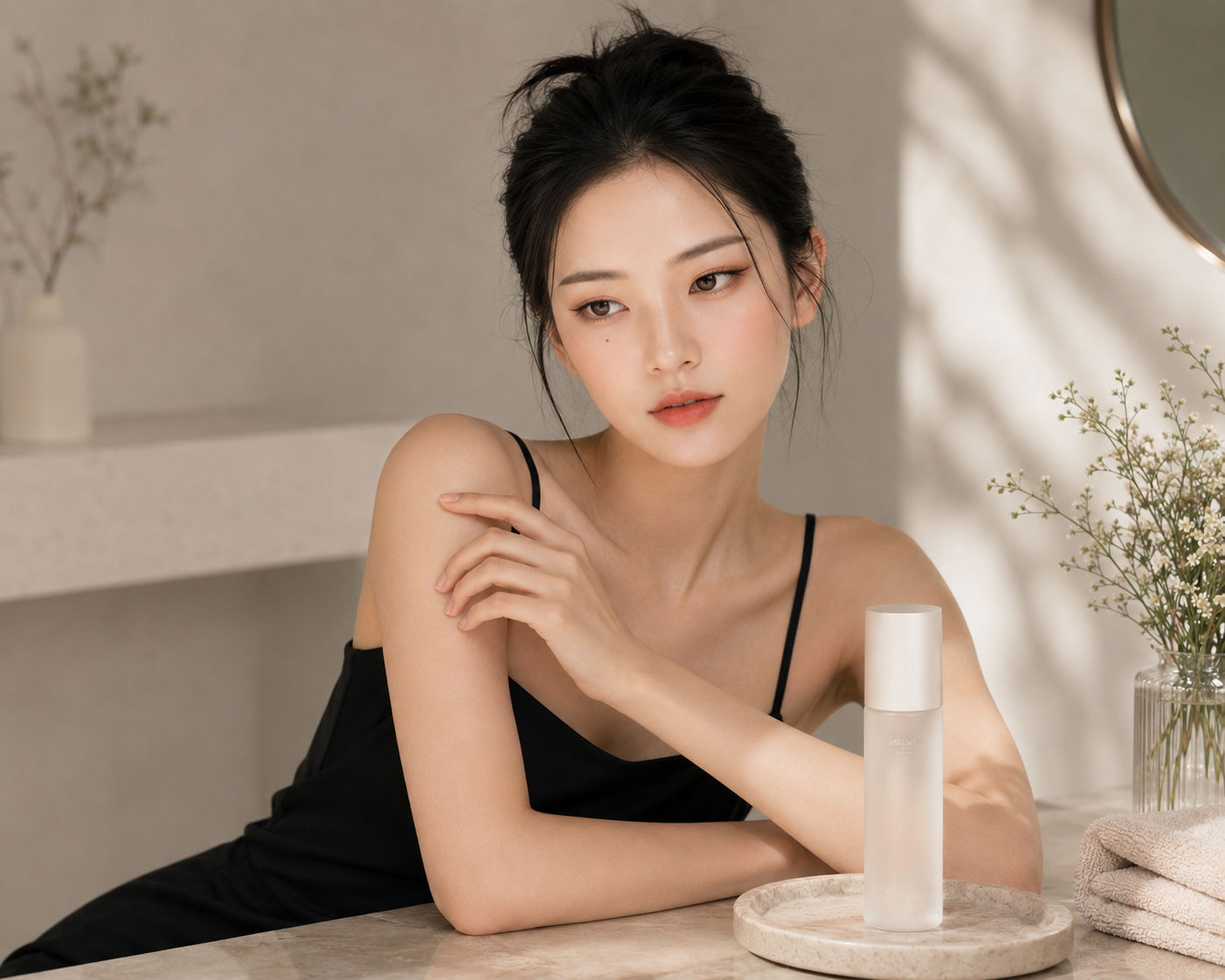
Sensitive skin sunscreen is a product with a simplified overall formula and verified skin solubility to reduce the possibility of stinging, heat sensation, itching, redness, dryness, and eye discomfort after application while maintaining UV protection. Since 'sensitive skin' is not a single, uniform skin type, suitability cannot be determined based on a single filter.
While zinc oxide and titanium dioxide-based inorganic sunscreens can serve as a primary development path, white cast, dryness, and friction can hinder their use on sensitive skin. Well-designed organic or hybrid sunscreens can also be developed into products suitable for sensitive skin after undergoing final product verification.
Therefore, the key to No. 065 is not a specific filter type, but rather managing the fragrance policy, filter, preservation, solvent, and emulsification systems, application feel, and skin water solubility of the finished product together. It is not extended to mean that it can be used to treat skin diseases such as atopic dermatitis, rosacea, or photoallergy, or immediately after a procedure.
Key Product Design Points: Broad-spectrum UV protection, fragrance-free and minimal formula, low eye area and skin discomfort, smooth application, and verified usability for sensitive finishes.
Consumers with sensitive skin are prone to discontinuing sunscreen use due to stinging, burning, tearing, or dryness after application. However, since ultraviolet rays can worsen redness in some sensitive and rosacea-prone skin types, there is a great need for products that can be used daily.
The main reasons for purchase are as follows.
• I want a product free of fragrances and essential oils.
• I want to reduce stinging, heat, and itching around the eyes and on the skin.
• I want to apply it gently even when my skin is dry or has a weak barrier.
• I look for products containing only necessary ingredients rather than complex plant extracts.
• It must leave minimal white cast and clump so that I can use a sufficient amount every day.
Although contact and photoallergies to sunscreens are uncommon, they can occur not only from UV filters but also from fragrances, preservatives, and base ingredients. Therefore, claiming "allergy-free" is not valid solely on the grounds that specific filters have been excluded. Topical Sunscreens and Contact Sensitivity
Sensitive skin sun care is a key global sector connected to dermatologist skincare in North America and the EU, as well as the hypoallergenic and barrier care markets in Korea. While "fragrance-free," "mineral filter," "minimal ingredients," and "sensitive-skin tested" are key purchasing terms, each expression must be supported by actual formulas and verification data.
While market opportunities are significant, defining the consumer group too broadly weakens product credibility. The required formulas and validations differ for general sensitive skin, acne-prone skin, and skin affected by rosacea, atopic dermatitis, and post-procedure procedures.
· Primary Consumer: Adults who have experienced stinging, dryness, or eye discomfort from standard sunscreens
· Barrier-Conscious Consumer: Consumers seeking products with reduced fragrances and complex formulas
· Tone Consumer: Consumers with various skin tones who require both a sensitive feel and low white cast
· Separate Validation Group: Individuals with a history of rosacea, atopic dermatitis, or allergies; children; and users with skin after cosmetic procedures
The American Academy of Dermatology advises that individuals with sensitive skin or those who experience stinging when applying sunscreen consider zinc oxide and titanium dioxide-based products, as well as fragrance-free options. While this serves as a useful starting point for product selection, it is not a guarantee of non-irritation for all consumers .
The key performance aspect is minimizing skin and eye discomfort while maintaining SPF and UVA protection, photostability, and a uniform film. Rather than using fewer filters, it is important to design the product to efficiently protect the necessary wavelength range and allow for the smooth application of a sufficient amount.
The formula consists of an allowable UV filter system, mild emollient, humectant, emulsifier, film former, rheology modifier, chelator, and preservation system. Although glycerin, panthenol, ceramide, etc., can be selected, it is more important to reduce fragrances, essential oils, and unnecessary dyes and to reasonably manage the total number of ingredients and exposure rather than adding a large number of soothing extracts.
Formula Route | Key Features | Recommended application |
|---|---|---|
| A. Minimal Mineral Lotion | Zinc oxide-centered, fragrance-free, simple formula, prioritizing comfort for sensitive skin. | General Sensitive Skin · NoChemiLife Direction |
| B. Lightweight Low-Discomfort Organic Fluid | Low cloudiness and light application, precise adjustment of filter and solvent feel | Avoids white cast · Suitable for various skin tones |
| C. Balanced Hybrid Barrier Lotion | A balance of inorganic and organic filters with moisturization and adherence | A compromise between white cast, eye discomfort, and dryness |
Route A is the clearest option for buyers who prioritize a sensitive feel . However, since usage may decrease on darker skin tones due to white cast, low-white-cast dispersion or limited tint routes should also be considered.
When selecting organic or mixed filters, do not prematurely conclude that they are 'unsuitable for sensitive skin'; instead, conduct actual usage tests on target consumers to compare eye area sensitivity, heat sensation, stinging, and reusability.
The interpretation of 'Sensitive-skin', 'hypoallergenic', and 'dermatologist-tested' varies by country and channel, and they do not imply non-irritating or non-allergenicity. Test methods, subjects, evaluation criteria, and results must be retained in accordance with the claim intensity.
It is important to evaluate finished products by reflecting not only the general population with normal skin but also those intended for sensitive use. The EU SCCS guidelines also explain that additional safety information regarding finished products may be required for cosmetics intended for specific target groups, such as babies and those with sensitive skin. SCCS Notes of Guidance
division | Key points to check |
|---|---|
| Korea | Functional Cosmetics Review & Reporting, Permitted Filters & Content, SPF & PA, Hypoallergenic & Sensitive Skin Claim Data |
| EU | Annex VI Filter, CPSR·PIF·CPNP, Truthfulness·Evidence·Honesty of Sensitive Skin Claims |
| USA | OTC sunscreen monograph, Broad Spectrum·SPF, Drug Facts, and basis for the sensitive-skin claim |
| China | Registration of specialty cosmetics, safety evaluation of filters and ingredients, efficacy and sensitivity data |
| Japan·ASEAN | Country-specific filters/labeling standards, SPF/UVA, notification/import manager |
| Mandatory Validation | SPF·UVA, light·Formula·microbial·preservation stability, container suitability |
| Recommended Validation | Water-soluble for skin and eye area, repeated use, stinging, burning sensation, redness, dryness, white cast, friction |
| When applying the Claim | Finished product data related to sensitive skin, hypoallergenic, non-comedogenic, fragrance-free, and water resistance |
For "Fragrance-free," you must verify not only the masking fragrance but also the essential oils used for scenting purposes. "Unscented" is not treated the same as "Fragrance-free" because there is a possibility that fragrances are used to mask the scent.
Even if 'patch tested' is indicated for consumers with a history of skin reactions, not all allergies can be predicted. Establish warning labels appropriate for the target country, such as discontinuation of use and consultation with a specialist in the event of adverse reactions, as well as a VOC and Adverse Reaction management system.
The standard container is a 40–60 mL light-blocking tube or an airless pump. For sensitive skin, a container that minimizes finger contact and contamination of the contents and facilitates accurate dosage is suitable. For fluids, check for leakage and over-dispensing, and for mineral lotions, check for pump clogging, particle sedimentation, and residual volume.
The shelf life is determined based on pH, viscosity, and appearance, as well as the dispersion, dissolution, crystallization, and photostability of the UV filter, odor, color, microbial and storage stability, and container suitability. Since excessively reducing preservatives to minimize skin discomfort may compromise microbial safety, an appropriate preservation system is verified for the finished product.
Prior to export, check for separation, sedimentation, crystallization, viscosity changes, and leakage after high and low temperatures, freeze-thaw cycles, light exposure, and transportation vibration. Changes in raw material suppliers, filter grades, preservatives, emulsifiers, and containers are managed as Change Control items, as they can affect user sensitivity and SPF data.
The recommended market position is Mass Premium to Masstige . While sensitive skin sunscreens have a high likelihood of repeat purchases, product reliability and adverse reaction management are crucial, not just price. It is difficult to differentiate a product that merely adds 'Sensitive' to a standard base without hypoallergenic data or a fragrance-free policy.
For Mass Premium, SPF 30–50+, high UVA protection, fragrance-free status, low white cast, and comfortable moisturizing properties are important. For Masstige, the differentiating factors are testing for sensitive skin, tint and skin tone compatibility, airless packaging, and more sophisticated clinical data.
Manufacturing costs and FOB vary depending on the UV filter route, inorganic filter dispersion, moisturizing and barrier-boosting ingredients, container, SPF and UVA testing and skin water solubility validation, target country, and MOQ. Buyers should not reflect testing costs solely in the initial manufacturing unit price but should make decisions by allocating them to the estimated production quantity and recurring orders.
Vanicream Facial Moisturizer Broad Spectrum SPF 30 combines non-nano zinc oxide, ceramide, fragrance-free, and non-comedogenic formulations. In sensitive skin sun care, a simple formula policy and daily moisturization are important benchmarks rather than complex active ingredients. Vanicream Facial Moisturizer SPF 30
Round Lab Birch Mild-Up Sunscreen UVLock SPF 50+ Broad Spectrum combines a mineral filter with a non-greasy, low-pilling texture, making it suitable for sensitive skin or skin with compromised skin barriers. It is a K-Beauty Benchmark where Korean OEM/ODM manufacturing connects high protection with a lightweight feel. Round Lab Birch Mild-Up Sunscreen
La Roche-Posay Anthelios Mineral Tinted Sunscreen SPF 50 combines a 100% mineral filter with a tint to address both sensitive skin and white cast correction. It demonstrates that for various skin tones, a tint beyond a simple white mineral formula may be necessary. Anthelios Mineral Tinted Sunscreen
EltaMD UV Skin Recovery SPF 50 links a 100% mineral filter with images of sensitive skin and barrier restoration. However, regarding barrier-related claims, you must check the finished product data for each item and the permissible scope of claims for each country. EltaMD UV Skin Recovery SPF 50
The competitiveness of Korean OEM/ODM lies not in merely listing 'hypoallergenic ingredients,' but in realizing fragrance-free and minimal formulas, light textures, low white cast, and skin solubility into a single product.
NoChemiLife Hero Direction: Scientifically utilizes necessary UV filters and preservation systems while reducing fragrances, essential oils, dyes, and decorative extracts, and verifies sensitivity in the finished product and under actual repeated use conditions.
manufacturing route | Fit | Recommended usage |
|---|---|---|
| Ready Formula | A | Rapid private label of base with secured skin water solubility data |
| Semi-Custom ODM | A+ | Filter, cloudiness, moisturizing effect, fragrance policy, and container adjustment |
| Full-Custom ODM | A | Minimal Formula and proprietary NoChemiLife Hero development |
| Global Scale-Up | A | Expansion after verifying raw material supply, production deviations, and VOC management |
For general buyers, a semi-custom ODM approach is suitable, involving adjustments to white cast, moisturizing properties, finish, and fragrance policies based on a base formula with established SPF, UVA, and skin solubility data . Even with a verified base, it is difficult to apply existing sensitivity data as is if filters, fragrances, preservatives, and multiple extracts are altered.
The process proceeds in the following order: Confirmation of target consumers and countries → Establishment of policies regarding filters, fragrance-free formulations, and excluded ingredients → Selection of Formula Route → Sample → Comparison of skin, eye area, white cast, and application → Validation of SPF, UVA, skin solubility, stability, and container → Golden Sample → Registration → Pilot production → Main production.
K-Beauty OEM/ODM & Private Label Inquiry
Contact to: mail@markethub.org
The Buyer must provide target countries, sales channels, launch date, specific definition of sensitive skin, target SPF and UVA, desired filter type, fragrance-free criteria, included and excluded ingredients, skin tone, texture, hydration and finish, eye area usability, water resistance, container and volume, MOQ, estimated quantity, target retail price and FOB, and necessary claims and tests.
In particular, you must decide the following four things first.
- Is it suitable for general sensitive skin, or does it target specific skin conditions?
- Which filter path should be selected among Mineral, organic, and hybrid?
- Which value takes precedence: minimizing white cast or formula simplicity?
- Which claim is needed among hypoallergenic, sensitive skin, non-comedogenic, and fragrance-free?
The greatest development risk is failing to define the target audience for 'sensitive skin' or claiming non-irritating properties based solely on the exclusion of a few organic filters. Conversely, excessively reducing even necessary preservation systems can compromise microbial safety.
Recommended Next Action
Buyer Brief → Confirmation of Sensitive Skin, Target Countries, Filters, and Fragrance-Free Policy → Semi-Custom Sample → Comparison of Skin, Eye Area, and White Cast → SPF, UVA, Skin Solubility, and Safety Validation → Golden Sample → Registration and Pilot Production → Global Launch
Global Core — A+
The demand for sensitive skin and fragrance-free sun care is evident in the global market, and there is high potential for repeat purchases and the scalability of barrier care product lines. However, trust can be secured only by specifically defining the target consumers.
OEM/ODM Priority — A
While verified mineral, organic, and hybrid bases can be used, skin solubility, eye area protection, claim validation, and VOC management are more important than with regular sunscreens.
NoChemiLife Hero — Hero Candidate
This allows for the clearest application of brand principles to reduce fragrances, essential oils, dyes, and decorative extracts. Necessary UV filters and preservation systems must be maintained, while claims of being "chemical-free" and "completely non-irritating" must be excluded.
Core Evidence
· Topical Sunscreens: A Narrative Review for Contact Sensitivity
· American Academy of Dermatology — Choosing the Right Sunscreen
· SCCS Notes of Guidance for Cosmetic Safety Evaluation
· European Commission — Technical Document on Cosmetic Claims
· FDA — Sunscreen Labeling and Effectiveness Testing
· Ministry of Food and Drug Safety — Regulations on the Examination of Functional Cosmetics
Runtime
Dataset Version: 2026.9
