


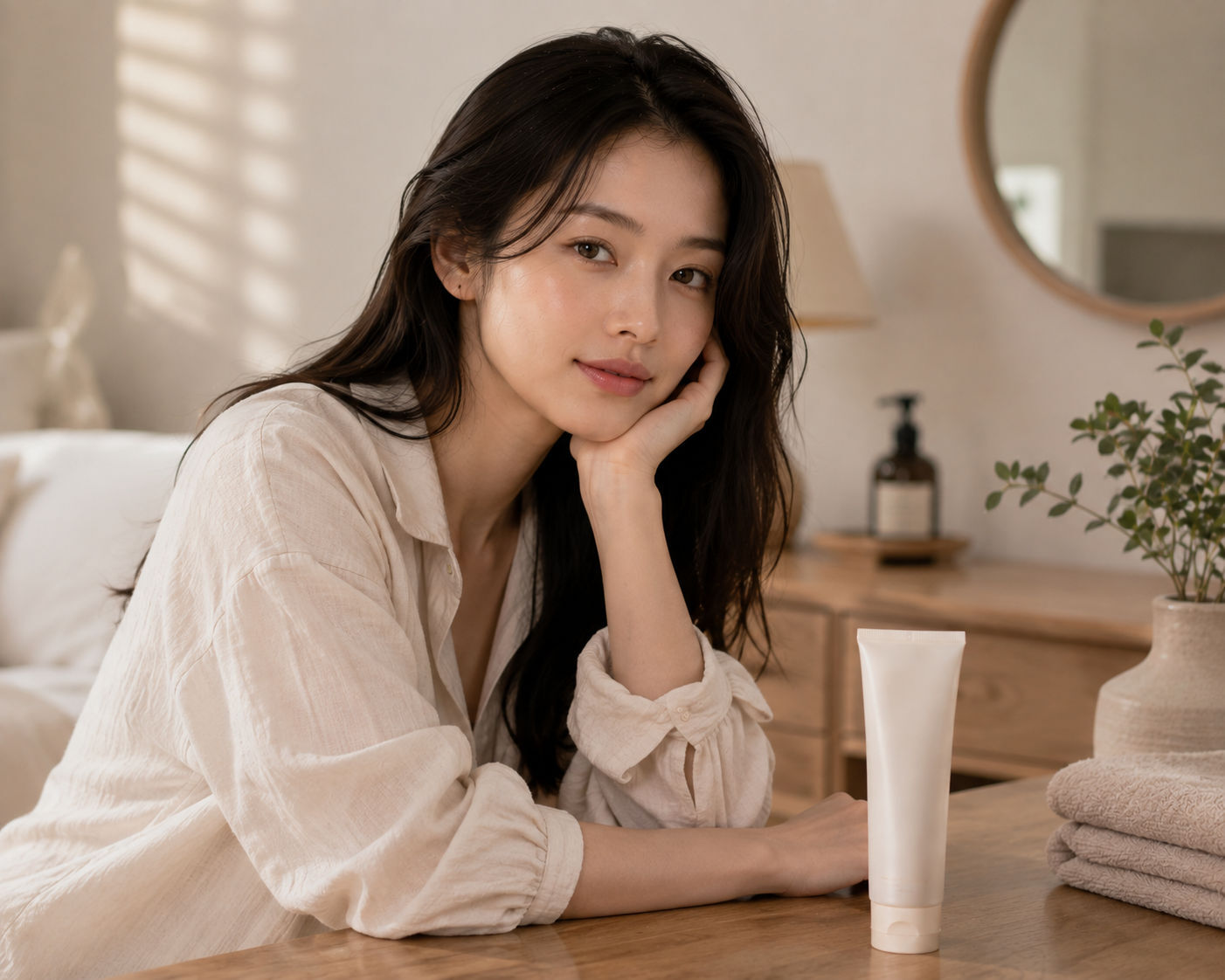
Organic sunscreen is a leave-on sunscreen designed so that organic UV filters absorb ultraviolet energy and convert it into a lower energy form. Here, 'Organic' does not mean organic or natural, but refers to organic UV-blocking ingredients with a carbon-based structure.
Since organic filters have different primary absorption ranges—such as UVB, UVA II, and UVA I—multiple filters are combined to achieve broad-spectrum protection. The performance of the finished product is determined not only by the type and content of the filters but also by dissolution and crystallization management, photostability, emulsification systems, the uniformity of the film on the skin, and the actual application amount.
It is easier to create lotion, essence, and serum textures that are more transparent and lighter than mineral sunscreens, making them suitable for various skin tones and makeup routines. On the other hand, eye irritation, burning sensations, and skin discomfort experienced by some consumers, as well as differences in filter approvals by country, must be managed from the early stages of development.
Key Product Design Features: Photostability UV filter combination suitable for target countries, high UVA and UVB protection, transparent and lightweight coating, low eye discomfort, and compatibility with makeup.
Consumers want sunscreens that provide high SPF and UVA protection, spread quickly without a white cast, and can be used comfortably under moisturizer or makeup. In particular, those with medium or dark skin tones often choose organic sunscreens to avoid the white residue left by inorganic sunscreens.
The main reasons for purchase are as follows.
• Need a product with minimal white cast on various skin tones.
• Desire a daily sun care product that is light and moisturizing like a hydrating cream.
• Must not feel heavy or stiff even when a generous amount is applied.
• Look for a product that does not cause makeup to smudge or cake.
• Want high UVA and UVB protection along with a fresh finish.
Factors that hinder purchasing include eye irritation, skin heat, stickiness, greasiness, and the distinctive smell of filters. Therefore, rather than emphasizing only "no white cast," it is necessary to also check usability around the eyes, reusability, sebum and sweat conditions, and ease of washing.
Organic sunscreens form the core market of global daily sun care based on their lightweight feel and transparent finish. K-Beauty has expanded sunscreen from a seasonal product to a daily skincare step by combining SPF50+ and PA++++ protection with essence and serum textures.
However, global expansion is constrained by formula compatibility. Some of the latest organic filters used in the EU, Korea, Japan, and other regions may not be equally permitted under the U.S. OTC sunscreen system. Although the FDA added bemotrizinol as a new OTC active ingredient in June 2026, the complete list of filters in the U.S. and other markets has not become identical. FDA announcement regarding the addition of bemotrizinol
· Primary Consumer: General adults seeking a daily high-protection sunscreen without a white cast
· Makeup Consumer: Consumers who want a product that adheres lightly under skincare or foundation
· Tone-Inclusive Consumer: Consumers who prioritize a transparent finish, ranging from light to dark skin tones
· Separate Validation Group: Individuals with sensitive skin, those who have experienced eye discomfort, children, and users engaged in strenuous outdoor activities
We do not generalize the product as being 'suitable for all sensitive skin' or 'completely free of eye irritation.' Not only the filter, but also the solvent, fragrance, preservative, and the entire formula affect the user experience.
Key performance indicators are the stated SPF, UVA protection level, photostability, and uniform film formation on the skin. It must be designed to provide a balanced combination of UVB- and UVA-focused filters and maintain protective performance even after exposure to light. The stability of sunscreens is a critical condition for maintaining both protective efficacy and safety. UV Filters: Challenges and Prospects
The formula consists of an organic UV filter blend permitted in the target country, a solvent/emollient, an emulsifier, a film former, a humectant, a rheology modifier, an antioxidant, a chelator, and a preservation system. Since the protective film, appearance, and usability may change if the filter crystallizes due to changes in time and temperature, sufficient solubility and long-term stability are required.
Formula Route | Key Features | Recommended application |
|---|---|---|
| A. Hydrating Essence-Cream | Moisturizing cream-type hydration, natural glow, smooth application | Normal to dry skin, all-season daily product |
| B. Lightweight Watery Fluid | Fast absorption, transparent finish, low stickiness | Global Universal · Representative K-Beauty Product |
| C. Soft-Matte Oil-Control Fluid | Suppresses shine and heaviness in sebum- and humid environments | Combination and oily skin, hot and humid market |
Route B has the widest range of application for general buyers . NoChemiLife Hero is best suited to a direction that improves filter odors, eye discomfort, and the need for repeated application, based on Route B which reduces fragrances, essential oils, dyes, and decorative extracts.
Plant extracts or natural antioxidant ingredients should not be used as substitutes for UV filters. While they can serve as auxiliary skincare ingredients, they cannot replace approved UV filters or finished product SPF and UVA testing.
For organic UV filters, you must first check the country-specific permission and maximum formulation limits. In the EU, only UV filters listed in Annex VI may be used under specified conditions, and safety assessments reflect the exposure and finished product usage conditions for each filter. EU Cosmetics Regulation
Controversy regarding a specific filter should not be extended to the risks associated with all organic sunscreens. At the same time, it cannot be simplified by claiming that "it is safe simply because it is used worldwide." For example, while the EU SCCS assessed octocrylene as safe under certain usage conditions, it presents both product types and combined exposure conditions. Buyers must verify the latest permissible conditions and supplier specifications for each formula. SCCS Opinion on Octocrylene
division | Key points to check |
|---|---|
| Korea | Review and reporting of functional cosmetics, permitted organic filters and content, basis for setting SPF and PA, labeling requirements |
| EU | Annex VI Filters/Formulation Limits, CPSR/PIF/CPNP, SPF/UVA Protection and Basis for Claim |
| USA | OTC monograph permitted active ingredient, Broad Spectrum and SPF testing, Drug Facts and manufacturing requirements |
| China | Special cosmetic registration, permitted filter/safety evaluation, SPF/PA and efficacy claim data |
| Japan·ASEAN | Country-specific filter list/formulation limits, SPF/UVA labeling, notification/import management |
| Mandatory Validation | SPF·UVA protection, photostability, formula·microbial·preservation stability, container suitability |
| Recommended Validation | Eye discomfort, burning sensation, stickiness, filter smell, makeup smudging, difficulty with repeated application |
| When applying the Claim | Finished product data related to water resistance, sensitive skin, non-comedogenic, and fragrance-free properties |
A high SPF does not automatically guarantee sufficient UVA protection. Separate justification meeting the target market's Broad Spectrum or PA/UVA standards is required. Water resistance cannot be verified without a water resistance test, and expressions implying complete protection, such as "waterproof" or "100% protection," should be avoided.
In the United States, since sunscreen is an OTC drug, it cannot be launched solely under MoCRA regulations intended for cosmetics. It is more realistic to either develop a formula specifically for the U.S. or select a verification base suitable for the current OTC monograph.
The standard container is a 40-60 mL light-blocking tube or an airless pump. For watery fluids, a narrow nozzle and a high-sealing cap are used to reduce leakage and over-dispensing, and for cream types, dispensing performance and residual amount are checked during repeated use.
The shelf life is determined based not only on appearance, pH, and viscosity, but also on filter dissolution, crystallization, emulsion stability, odor and color changes, microbial and storage stability, and container suitability. Since the filter or formula may change under light exposure and high temperatures, light shielding properties and the transportation environment are also verified.
Prior to export, check for separation, crystallization, viscosity changes, and leakage after high and low temperatures, freeze-thaw cycles, and transportation vibrations. If the filter supplier, grade, solvent, emollient, emulsifier, or film former is changed, re-evaluate the applicability of existing SPF, UVA, and stability data.
If the formulas for the versions sold in the US, EU, and Korea differ, the same packaging and full ingredient images should not be mixed on global platforms. Product IDs, full ingredients, SPF/UVA labeling, and responsible parties must be managed separately by country.
The recommended market position is Mass Premium to Masstige . Organic sunscreens have high mass appeal due to their low white cast and design flexibility for user experience; however, the use of the latest photostability filters, high-quality emollients, film formers, finished product testing, and country-specific registrations can increase production costs.
In Mass Premium, SPF50+, high UVA protection, a light texture, low stickiness, and a repeat purchase price of around 50mL are important. In Masstige, high UVA protection range, a fragrance-free policy, usability around the eyes, water resistance, and clinical data are the differentiating factors.
Manufacturing costs and FOB vary depending on filter composition and content, filter country of origin and supply contract, solvents and emollients, containers, SPF and UVA testing, the number of target countries, MOQ, and production volume. To launch simultaneously in multiple countries, profit and loss must be calculated by distinguishing between the feasibility of a single global formula and the costs of separate formulas, such as those for the U.S.
**Beauty of Joseon Relief Sun: Rice + Niacinamide SPF50+ PA++++** combines an organic UV filter combination with a moisturizing cream texture and a transparent, hydrating finish. It is a representative K-Beauty Benchmark that links sufficient protective performance with a sensation that is easy to apply daily .
Isntree Hyaluronic Acid Watery Sun Gel emphasizes the lightness of organic sunscreens and a skincare experience with its hydrating gel-lotion texture. It demonstrates the direction in which K-Beauty organic sunscreens are being commercialized by combining the boundaries between moisturizers and sun care, offering not only protection without a white cast but also a seamless transition. Isntree Hyaluronic Acid Watery Sun Gel
**La Roche-Posay Anthelios UVMune 400 Invisible Fluid SPF50+** combines broad-spectrum UVB and UVA protection with ultra-long wavelength UVA protection in the 380–400nm range, along with a lightweight fluid texture. It demonstrates that the global competitiveness of organic sunscreens is determined by UVA protection range, photostability, and water resistance, rather than mere transparency. Anthelios UVMune 400 Invisible Fluid
Rather than replicating overseas products, Korean OEMs and ODMs must combine filter combinations accepted in the target market, moisturizing textures, low eye discomfort, filter odor, and makeup suitability.
NoChemiLife Hero Strategy: Rather than claiming to be 'chemical-free,' it applies necessary organic UV filters based on evidence, reduces fragrances, essential oils, pigments, and decorative extracts, and verifies protective performance, photostability, and skin acceptability.
manufacturing route | Fit | Recommended usage |
|---|---|---|
| Ready Formula | A+ | Fast Private Label utilizing a verified country-specific base |
| Semi-Custom ODM | A+ | Moisture, viscosity, finish, fragrance policy, and container adjustments |
| Full-Custom ODM | A | Proprietary filter system and NoChemiLife Hero development |
| Global Scale-Up | A | Expansion after verification of filter supply, test deviations, and national conformity |
For general buyers, a semi-custom ODM is suitable for adjusting texture, moisturizing properties, finish, and fragrance policies within a base formula that is appropriate for the target country and has secured SPF and UVA data . If the UV filter, content, solvent, or film former is changed, it must be re-evaluated whether the existing test data can be used as is.
The process proceeds in the following order: Confirmation of target countries and sales channels → Review of permitted filters → Selection of Formula Route → Sample → Comparison of eye area, stickiness, gloss, and makeup → Validation of SPF, UVA, photostability, and container → Golden Sample → Registration by country → Pilot production → Main production.
K-Beauty OEM/ODM & Private Label Inquiry
Contact to: mail@markethub.org
The Buyer must provide target countries, consumers, sales channels, launch date, target SPF and UVA labeling, permitted and excluded UV filters, skin type, climate and usage environment, desired texture, moisture level and finish, eye area usability, fragrance policy, water resistance, container and volume, MOQ, estimated quantity, target retail price and FOB, and necessary claims and tests.
In particular, you must decide the following four things first.
- Which market among Korea, the EU, the US, and China is the primary target?
- Which path is it: a moisturizing essence-cream or a light watery fluid?
- Is it for everyday use, or is it suitable for outdoor use considering exposure to sweat and water?
- Which claim is needed among fragrance-free, sensitive skin, non-comedogenic, and water resistance?
The greatest development risk is mistaking the inclusion of numerous state-of-the-art filters for technological prowess, while belatedly verifying approval by target countries, photostability, and finished product testing. Furthermore, one must not generalize organic sunscreens as being "white-free and non-irritating," nor conclude that eye discomfort is solely a problem caused by the filter.
Recommended Next Action
Buyer Brief → Confirmation of Target Countries, Filters, and SPF/UVA → Country-specific Formula Compatibility Review → Semi-Custom Sample → User Experience Comparison → SPF, UVA, Photostability, and Container Validation → Golden Sample → Registration and Pilot Production → Global Launch
Global Core — A+
With minimal white cast and a lightweight texture, it is suitable for various skin tones and global daily sun care. It has high potential for repeat purchases, skincare sets, and online distribution expansion.
OEM/ODM Priority — A+
Korean manufacturers possess experience in developing various organic filter combinations and essence/serum textures, giving them an advantage in rapid commercialization. However, filter approvals and testing and registration pathways for each target country must be determined first.
NoChemiLife Hero — Hero Candidate
It is possible to reduce fragrances, essential oils, pigments, and decorative extracts, and design only the necessary organic UV filters based on evidence. The key is not being "chemical-free," but rather transparent verification of protective performance, photostability, and water solubility around the eyes and on the skin.
Core Evidence
· FDA — Bemotrizinol Added to the OTC Sunscreen Monograph
· EU Cosmetics Regulation — UV Filters and Annex VI
· SCCS — Opinion on Octocrylene
· UV Filters: Challenges and Prospects
· Sunscreens and Photoaging: A Review of Current Literature
· Ministry of Food and Drug Safety — Regulations on the Examination of Functional Cosmetics
Runtime
Dataset Version: 2026.9
