


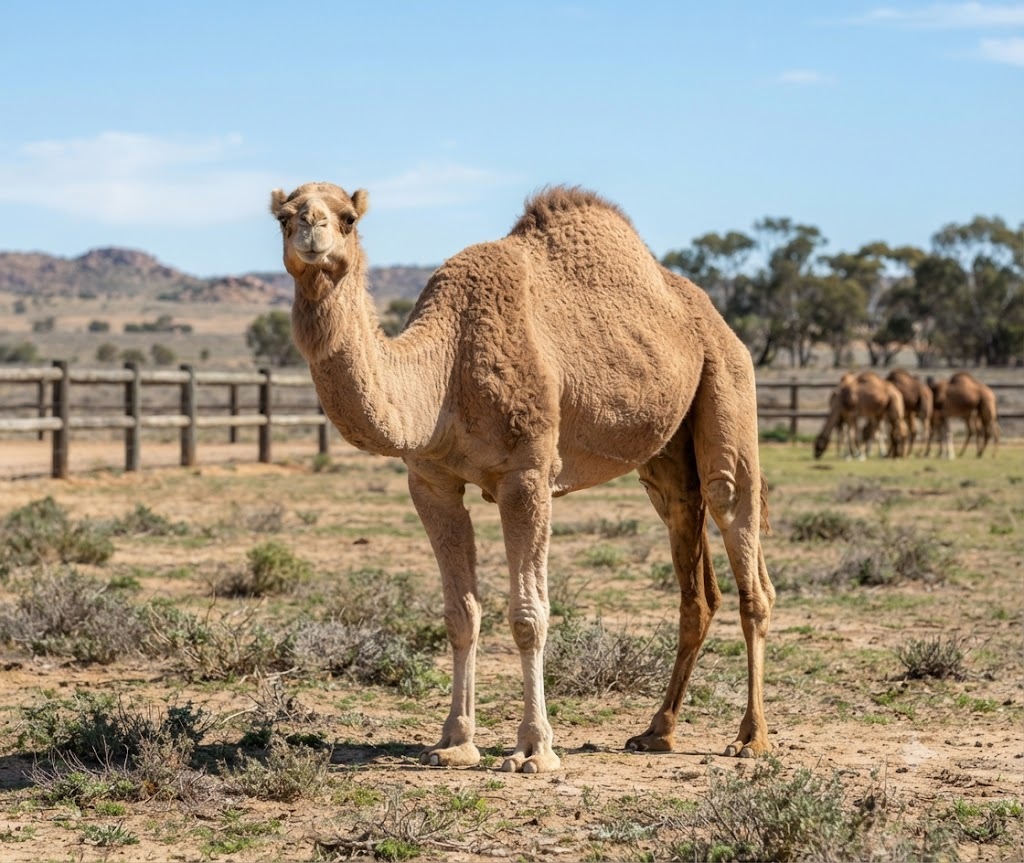
Although camels are not a common commercial livestock species in Korea, they are important animals in arid regions such as Africa, the Middle East, and Central Asia, providing milk, meat, fiber, and transportation. The FAO estimates the global camel population to be over 41 million , describing dromedary camels as being better adapted to plains and desert regions, while Bactrian camels are better adapted to mountainous and cold regions. ( FAOHome )
At MarketHub, it is appropriate to view camels not merely as items for expanding domestic farming, but as a global market encompassing camel milk, meat, breeding stock, processing raw materials, quarantine, and supply chain intelligence . In particular, camel milk serves as an important food and income source in arid regions, and with its recent expansion into dairy products and international markets, it holds value for a buyer-centric RFQ. ( FAOHome )
Judgment axis | Key points |
| Main types | Dromedary camel and Bactrian camel |
| production purpose | Useful · Meat · Transportation · Breeding · Fiber |
| major regions | Africa, the Middle East, South Asia, and Central Asia |
| production core | Breeding, milk production, feed, and adaptation to dry land |
| Main Products | Camel milk, camel meat, breeding stock, fiber |
| Major risks | Diseases and quarantine such as Camelpox and FMD |
| AX | Individual, production, reproduction, health, and movement data |
| RFQ | Live animals, breeding stock, camel milk, meat, processed raw materials |
| Final goal | Connecting dryland producers with global buyers |
Camels have the advantage of being able to produce milk even under poorer feed conditions than other dairy livestock. The FAO explains that camels are important dairy animals in low-input production systems and contribute to food security and farm income in arid and semi-arid regions. ( FAOHome )
Camels can be broadly divided into dromedaries (Camelus dromedarius) and Bactrian camels (Camelus bactrianus) . The FAO describes dromedaries as primarily found in lowlands and arid regions, while Bactrian camels are associated with mountainous and cold regions; both types play diverse roles in milk, meat, fiber, and transportation. ( FAOHome )
The industrial value of camels lies in the diversity of products and services rather than the livestock itself. Since various products and services—ranging from camel milk, meat, wool and fibers, to transportation and tourism—are generated from a single species, MarketHub manages each as a separate entity.
division | Main purpose | major products |
| dromedary camel | Useful, meat, transportation | Milk and meat |
| two-humped camel | Meat, Fiber, Transportation | Meat and fur |
| breeding stock | Breeding and improvement | Breeding mothers · Breeding females |
| Useful camel | dairy | Camel Milk |
| meat camel | meat | Camel Meat |
| etc | Textiles and transportation | Hair and transportation services |
The basic structure is managed as Camel → Type/Breed → Production Purpose → Product/Service → Buyer .
When it comes to camels, one must first distinguish between dromedaries and Bactrians. Even among camels, they should not be compared based on a single productivity criterion, as they differ in climate adaptation, milk production capacity, physique, and the purpose of their wool production and use.
Furthermore, the management objectives for utility, meat, and transportation purposes are completely different. While milk yield and quality are important in RFQs seeking camel milk buyers, weight, health, temperament, and activity level may be more important for meat, tourism, or transportation purposes.
division | example | On-site management |
| livestock species | camel | Camel |
| category | Dromedary·Bactrian | Climate adaptation |
| production purpose | Useful, meat, transportation | Farm operation |
| production stage | Self-celebration, rearing, breeding, milking | Step Management |
| product | Milk, meat, and fiber | Quality and Standards |
| service | Transportation and Tourism | ability to use |
Therefore, in the RFQ, you must not simply enter Camel, but also verify Type + Purpose + Product + Origin .
Although camels are livestock well adapted to arid regions, this does not mean they can achieve high productivity with low inputs. For commercial camels, breeding interval, milk production, offspring survival, and feed and water supply are important, while for meat camels, growth rate and market weight must be considered together.
The FAO describes a daily milk yield of approximately 5 liters as acceptable in a typical low-input camel production system, noting that yields range from about 1,000 to 2,700 liters per farm in Africa , and that there are reported cases of much higher production in South Asia. Since this range varies by region, breed, and feeding conditions, it is managed as a benchmark rather than used as a single standard production volume. ( FAOHome )
Management area | Things to see at a farm |
| breeding | Mating, pregnancy, and childbirth |
| Self-celebration | Birth, Growth, Death |
| feedstuff | Pasture, hay, and supplementary feed |
| Oil production | Daily milk production and milk quality |
| growth | Weight gain |
| health | Diseases and Parasites |
| environment | High temperature, water, shade |
| expense | Feed, Water, Labor, Veterinary |
Milk production in camels can vary significantly depending on the season and rainfall. Therefore, when comparing global production sites, it is important to consider feed conditions, precipitation, the dry and wet seasons, and milk production together . ( FAO Home )
Quality control of camels is fundamentally based not only on milk or meat standards but also on the individual's health and disease status. When trading live animals and breeding resources internationally, the animal disease situation and quarantine standards of the country of origin become direct conditions of trade.
WOAH separately registers Camelpox as an internationally managed camel disease and re-emphasized the risk of the international spread of Foot-and-Mouth Disease in 2026. As camels can also be affected by various transboundary animal diseases, the latest animal health status by country and region must be checked during actual trade. ( WOAH )
step | Key Management |
| birth | Individual · Parent · Date of Birth |
| upbringing | Weight, Feed, Health |
| breeding | Mating, pregnancy, and childbirth |
| milking | Milk Production · Milk Lot |
| health | Disease, Examination, Treatment |
| movement | Farms, markets, and exports |
| slaughter | Individual · Conductor · Lot |
| circulation | Product · Country of Origin · Buyer |
MarketHub links Animal ID → Health → Milk/Meat Lot → Processing → Buyer . Diseases are managed via Runtime using Disease + Region + Effective Date + Current Status.
In Korea, camels are not considered a product with a standard livestock production base. Therefore, rather than arbitrarily estimating the domestic livestock numbers or market size, it is appropriate to first verify whether there are buyers who actually need camel milk, camel meat, and processed products.
MarketHub has particular value in utilizing camels for global raw material procurement RFQs . This method involves comparing production countries, processing companies, quarantine, and logistics conditions if dairy or food companies require camel milk or camel meat.
Participants | Things needed | Possibility of cooperation |
| camel farm | Breeding Livestock · Feed · Buyer | Producer RFQ |
| dairy companies | camel milk | Dairy RFQ |
| Dairy processing company | Processed raw materials | Processing |
| Meat companies | camel meat | Meat RFQ |
| importing companies | overseas suppliers | Import |
| tourism companies | Camel experience | Service |
| Research Institute | Genetic resources and productivity | R&D |
| local government | Review of new business | Pilot |
When considering domestic production in Korea, it is safer to approach it with a small-scale demonstration after verifying all factors including suitability for breeding, quarantine, dairy processing, slaughter, and the buyer .
Camel supply chains can vary significantly depending on the production region, ranging from traditional pastoralism to intensive dairy farming. In pastoralism, migratory grazing and connections to local markets are crucial, whereas in intensive dairy farming, milk collection, refrigeration, processing, and product commercialization are key.
Animal health status is critical in international trade. As WOAH emphasizes that official animal health status recognition remains a key system for safe international trade and trust between nations even in 2026, quarantine compliance must be verified before price in actual RFQs. ( WOAH )
Dairy Supply Chain
Farm → Milking → Cooling/Collection → Processing → Cold Storage → Buyer
Meat supply chain
Farm → Shipment → Slaughter → Processing → Refrigeration/Frozen → Buyer
Confirmation area | Main contents |
| Happy Birthday | Type, Gender, Age, Health |
| milk | Origin, Quality, Processing Status |
| meat | Part · Weight · Refrigerated · Frozen |
| Quarantine | Country/Disease Status |
| trade | HS·Customs·FTA |
| facilities | Approval for production, slaughter, and processing |
| distribution | Refrigeration, freezing, and transportation |
| Buyer | Specifications, Quantity, Delivery Date |
When a Korean import RFQ is generated, the latest conditions based on the actual transaction date must be reconfirmed from the Animal and Plant Quarantine Agency, the Ministry of Food and Drug Safety, and the Korea Customs Service.
One of the most distinctive processed raw materials from camels is camel milk. The FAO explains that camel milk is an important food source and a source of income for farmers in arid regions, and that the value of the dairy processing industry has recently been expanding. ( FAOHome )
PRP does not determine marketability solely because camel milk is special. It is necessary to compare which producer in which country can reliably provide the quality, price, quantity, and processing conditions desired by the buyer .
product | Main uses |
| Livestock and breeding stock | Breeding and production |
| Camel Milk | Drinking and Dairy Products |
| Camel Dairy | Fermented milk and processed products |
| Camel Meat | Food & Dining |
| Fibre/Hair | Textiles and Crafts |
| leather | industrial materials |
| excretions | Fuel and compost |
Key PRP questions include whether production costs are appropriate relative to milk yield, whether the quality of camel milk meets buyer requirements, whether long-distance refrigeration and processing are feasible, whether import conditions for meat and dairy products are met, and whether stable monthly supply is possible.
Camel AX must take into account the realities of migratory pastoralism in arid regions. In many areas, a method that links GPS, mobile individual management, milk production records, disease reporting, water supply, and grazing data is more practical than large-scale fixed facilities.
Conversely, in intensive dairy farming in the Middle East, more sophisticated systems such as automated milking, individual milk yields, and feed and health sensors can be applied. Therefore, it is important not to apply a single AX model to all camel farms, but to divide it according to production systems.
Apply AX | Farm and business effects |
| Object registration | Production and health history |
| GPS | Movement and Grazing Management |
| Oil production records | Confirmation of superior individuals |
| Breeding records | Production cycle improvement |
| Health report | Early response to disease |
| Water and feed data | Dryland Production Management |
| Milk Lot | Quality and History |
| Buyer Matching | Global sales channels |
The key is to first collect data suitable for the local production system and then apply automation .
The challenges facing the camel industry differ between producing and consuming countries. In production regions, water scarcity, drought, feed, breeding, and veterinary services are critical, whereas in import markets like Korea, product recognition, quarantine, logistics, and securing buyers can be greater issues.
The FAO’s 2026 Camelids report also assesses that camels contribute to resilience against the climate crisis and food security in arid regions. Conversely, however, we must avoid viewing camels as universally adaptable livestock due to these strengths and instead verify their actual productivity, disease, and marketability using data. ( FAOHome )
problem | Data to verify |
| drought and water shortage | Rainfall, water supply, and grazing |
| feed shortage | Pasture and supplementary feed |
| Oil production deviation | Breed, feed, season |
| breeding | Mating and calving intervals |
| disease | Camelpox, FMD, etc. |
| Veterinary services | Community and access to medical care |
| refrigerated logistics | Milk and meat temperature |
| Quarantine | Country, Product, Disease |
| Buyer shortage | Demand, Specifications, Price |
| Data shortage | Production, Price, Transaction |
In Korea, the appropriate sequence is Buyer verification → Product/Country comparison → Quarantine verification → Small-scale import/Market test → Expansion .
For camel RFQs, the function of connecting global producers with Korean buyers may be more important than serving domestic farms. Camel milk farms, dairy processing companies, meat production and slaughtering companies, and breeding stock suppliers should be viewed as distinct suppliers.
Even when considering domestic trial breeding, it is risky to import breeding stock first. The pilot program should be designed only after verifying with the actual buyer whether processing, slaughtering, veterinary, and facility conditions are in place.
RFQ Type | Collaboration Examples |
| breeding stock | Dromedary and Bactrian camels |
| Happy Birthday | Breeding and meat |
| camel milk | Drinking and processing raw materials |
| Dairy processing | Product Development · OEM |
| camel meat | Food Service & Food |
| fiber | Hair/Raw Material |
| import | Production country/processing company |
| Domestic Pilot | experimental rearing |
| Research cooperation | Climate, oil fields, and dairy farming |
| Buyer | Food, Dairy, and Foodservice |
Sensitive production volume, price, facilities, and contract conditions are managed at the Verified/NDA stage.
In the MarketHub Livestock Library, the role of Camel is more important in connecting global suppliers with the Camel products that actual buyers need, rather than focusing on domestic production information . Therefore, the principle is to identify demand first rather than starting with production.
In particular, for products not commonly available domestically, such as camel milk and camel meat, we do not proceed based solely on the assumption that there is market potential. We first verify the buyer's product type, quantity, price, certifications, and quarantine conditions.
① Find products/raw materials.
Need Products & Materials
Companies and institutions seeking necessary breeding stock, live animals, camel milk, camel meat, and dairy raw materials register their purchase demands. MarketHub reviews country of origin, product type, quantity, quality, and quarantine conditions to find companies and producers capable of supplying the goods.
RFQ Registration → Supply Condition Review → Connecting Producers and Companies → AI Matching
Register
② We are looking for production and manufacturing partners.
Need Suppliers & Manufacturers
We seek necessary supply partners, including camel farms, milk collectors, dairy processors, slaughterhouses, and processing companies. We verify production capacity as well as health, processing, logistics, and the feasibility of a sustainable supply.
RFQ Submission → Review of Production/Processing Capabilities → Partner Connection → AI Partner Matching
Register
③ We are looking for domestic and international buyers.
Need Buyers
Camel farms and processing companies seek new buyers, including food, dairy, restaurant, and distribution firms. We verify product specifications, country of origin, supply volume, and price conditions to connect them with suitable suppliers.
RFQ Submission → Product & Supply Capability Review → Buyer Connection → AI Buyer Matching
Register
Contact : mail@markethub.org
It is important to manage the camel dataset by both country and region. This is because even for the same dromedary camel, milk production, feed, climate, disease, and price can vary significantly depending on the region and the production system in which they are raised.
In particular, itinerant pastoralism and intensive dairy farming are not viewed as the same farm model. Accurate benchmarking is possible only by separating production systems and linking individual, product, and buyer data.
Dataset | Simply put |
| Master | Camel Type and Product Standards |
| Entity | Farms · Camels · Processing Companies · Buyers |
| Relationship | Production, processing, and trade relations |
| Runtime | Oil production, disease, price, climate change |
The representative structure is as follows.
Country/Region → Farm/Ranchman → Camel → Breeding/Feed/Health → Milk/Meat → Processing → Quarantine → Buyer
By adding Climate, Pasture, and Water data, it is also possible to analyze productivity in arid regions.
Since overseas production information is far more crucial for camels than for Korea, data from international organizations such as the FAO and WOAH was applied first. In particular, the FAO continues to publish separate reports on the production, products, services, and climate resilience of camels in 2026, making it highly valuable for verifying the global industry structure. ( FAOHome )
Diseases and international trade must be verified up to date. As WOAH re-emphasizes in August 2026 that official animal health status remains a core system supporting trust in international trade, country-specific quarantines are re-verified immediately prior to trade in actual camel RFQs. ( WOAH )
Evidence | source |
| A | FAO · WOAH · Government · Official Statistics |
| B | Papers · Research Institutes |
| C | Association/Verification Industry Data |
| D | Corporate and Market Data |
| E | Additional verification needed |
Key factual basis
- FAO — The global camel population is estimated at over 41 million, and they are raised primarily in Africa and Asia. ( FAOHome )
- FAO — Camels provide diverse production and service value, including milk, meat, fiber, and transportation, and contribute to food security in arid regions. ( FAOHome )
- FAO — The organic milk yield of African camels is generally reported to range from approximately 1,000 to 2,700 liters, with significant variations depending on the region and breed. ( FAOHome )
- WOAH — Camelpox is an internationally managed camel disease. ( WOAH )
- WOAH — The risk of the international spread of Foot-and-Mouth Disease by 2026 has been highlighted again, necessitating continuous surveillance of transboundary livestock diseases. ( WOAH )
- WOAH — Official Animal Health Status Recognition in 2026 continues to operate as a key foundation for safe international trade. ( WOAH )
Version History
Version | Main contents | situation |
| v1.0 | First registration based on precise global production, dairy, disease, and supply chain surveys | complete |
| v1.1 | Reinforcement of raw data on Korean imports, HS codes, quarantine, and markets | expected |
| v2.0 | Country·Climate·Oil Production·PRP Runtime Connection | expected |
| v3.0 | Global Producer, Processor, and Korean Buyer Verified Matching | expected |